


Losing a tooth can change chewing, the position of the neighbouring teeth and the balance of the smile. Replacing it therefore deserves careful analysis, tailored to each situation, in order to restore comfortable chewing and a natural smile.

Why replace a missing tooth?
A missing tooth can seem like little inconvenience, especially at the back of the mouth. Yet over time the neighbouring teeth move and the bone weakens.
The neighbouring teeth can drift into the empty space. The tooth opposite can also change position when it no longer has anything to meet during chewing. These changes disturb the bite, make hygiene more difficult and create an imbalance in the dental arch, with a real impact on posture.
Replacing a tooth therefore makes it possible to restore more stable chewing while preserving the arrangement of the remaining teeth and the harmony of the smile. This replacement often helps you regain comfort and confidence day to day.
Dental implant, bridge or denture: which options for replacing a tooth?
There is no universal solution. The choice of treatment depends on many factors: the number of teeth to replace, the condition of the neighbouring teeth, the bone volume available, gum health, your hygiene habits and your functional and aesthetic expectations.
The dental implant
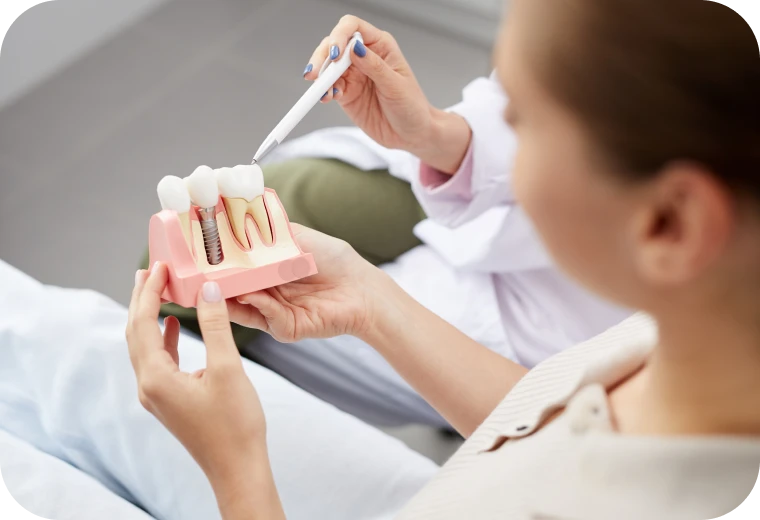
A dental implant replaces the root of a missing tooth with an anchor placed in the bone. A crown, a bridge or a denture can then be fixed to it. This option can replace a tooth without relying on the neighbouring teeth for support, when clinical conditions allow.
Before considering an implant, analysing bone volume, gum health and the balance of chewing is essential.
The dental bridge
A bridge replaces one or more missing teeth by resting on the neighbouring teeth. It may be indicated when those teeth are strong enough or when they already need a restoration.
This option calls for careful study of the supporting teeth, their strength and their role in chewing.
The removable denture
A removable denture can replace several missing teeth or sometimes a whole arch. It is custom-made and must be taken out for cleaning.
It can address certain clinical situations, particularly when other options are not indicated or when a step-by-step approach is preferable.
A full dental assessment before any decision
Replacing a tooth does not begin with choosing a technique, but with a diagnosis. The assessment makes it possible to evaluate the mouth as a whole and understand what you want to regain day to day.
The clinical examination covers the remaining teeth, the gums, the area concerned, chewing function and the aesthetics of the smile. X-rays and photographs can complete this analysis. When a dental implant is being considered, 3D imaging is indicated in order to study bone volume and the anatomical structures that must be respected.
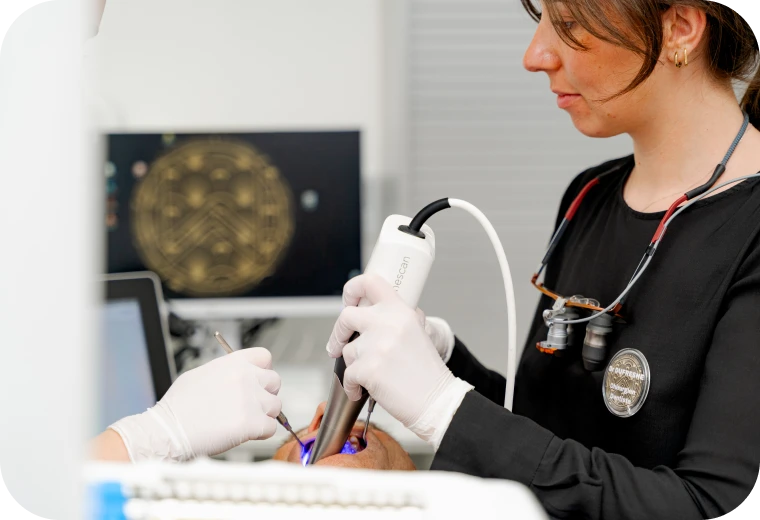
This step makes it possible to set out the various options, their indications and their limitations, so that together we can define a suitable treatment plan.
Replacing a missing tooth: function, appearance and balance
A replaced tooth must fit into the balance of the mouth, both functionally and aesthetically. The shape, shade, volume and position of the restoration are designed to match the neighbouring teeth.
The aim is to restore a consistent continuity in the smile, without isolating the replaced tooth from the rest of the mouth. This attention to detail contributes to a stable, comfortable and harmonious restoration, where clinical conditions allow.
The role of the gums and the bone
The gums and the bone form the foundation of the future restoration. Their condition directly influences the available options, particularly when a dental implant is being considered.
After a tooth is lost, bone volume can gradually reduce in that area. The quality of the gums must also be assessed carefully: when they are weakened or inflamed, specific treatment may be needed before starting.
Caring for a replaced tooth
A replaced tooth requires regular care and long-term follow-up. While a crown, a bridge or an implant-supported restoration does not decay in the same way as a natural tooth, the tissues around them remain vulnerable to plaque build-up.
When a crown or a bridge rests on a natural tooth, that tooth can still be at risk of decay, particularly at the margins of the restoration. The gums and the bone must also stay healthy in order to keep the treatment stable and long-lasting.
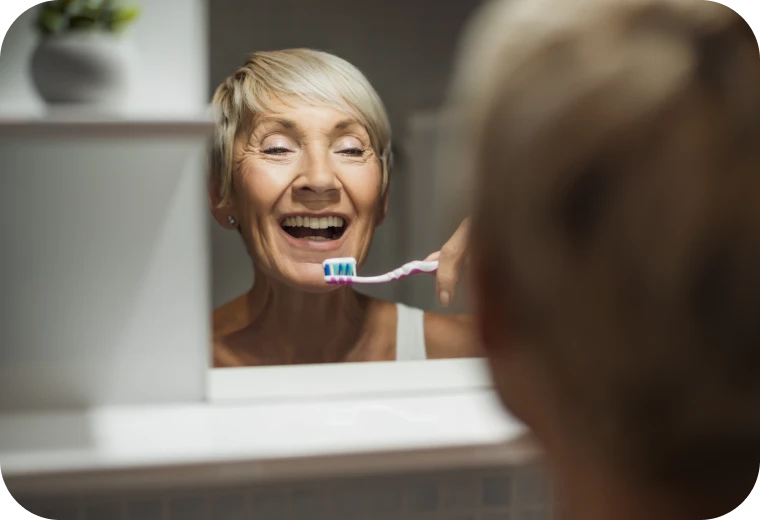
Brushing, interdental cleaning and regular check-ups all help keep the restoration stable. Depending on your situation, specific tools may be recommended, such as interdental brushes, dental floss or a water flosser.
A pathway designed around your comfort
Replacing one or more teeth is a treatment plan that deserves to be understood at every stage. From the initial assessment to the final restoration, the pathway is explained carefully so that you can move forward calmly, knowing what is planned, why and when.
Support is very much part of the treatment: listening to your expectations, clear explanations, scheduled appointments and availability to answer questions. Where the situation calls for it, a temporary solution maintains both appearance and chewing support throughout the treatment.
A consultation to assess the possible solutions
When one or more teeth are missing, the situation needs careful assessment. A consultation makes it possible to explore the options available for your situation: dental implant, bridge, crown or removable denture.

Frequently asked questions
Should a tooth that cannot be seen be replaced?
Even at the back of the mouth, a missing tooth can change chewing, allow the neighbouring teeth to drift and disturb the balance of the jaw. An assessment by a dental surgeon is generally recommended.
What are the options for replacing a missing tooth?
Depending on the situation and the diagnosis made by the dental surgeon, several options can be explored: a dental implant, a bridge, a crown, a removable denture or a combined approach. The choice depends on the diagnosis.
Is a dental implant always possible?
Not automatically. Placing an implant depends in particular on bone volume, gum health, general health and the balance of chewing.
How do you choose between an implant, a bridge and a denture?
The choice rests on analysing the remaining teeth, the bone, the gums, hygiene habits and the patient’s expectations. Each option has its indications and its limitations.
How should a replaced tooth be cared for?
Care rests on careful brushing, cleaning between the teeth and regular check-ups. These habits make it possible to monitor the gums, the restoration and chewing.

