

A removable denture replaces several missing teeth, or even all the teeth in one arch. It is custom-made and must be taken out for daily cleaning.
When it suits the clinical situation, is cleaned every day and checked regularly, a removable denture can help to improve chewing and support the lips and cheeks when several teeth are missing. Whether it is indicated depends on several factors: the number of missing teeth, the condition of the remaining teeth, gum health, the bone volume available, the balance of chewing and your functional and aesthetic expectations.

What is a removable denture for?
A removable denture replaces missing teeth in order to restore more comfortable chewing and re-establish continuity in the smile. Depending on the situation, it also helps to support the lips and cheeks.
This restoration is custom-made from an analysis of the mouth and precise impressions. Its shape, support, volume and retention are designed around your oral situation.
A removable denture does more than replace missing teeth. It forms part of overall care that takes account of chewing, the aesthetics of the smile, the supporting tissues and day-to-day comfort.
Partial or complete removable denture:
what is the difference?
There are several types of removable denture. The choice depends on the number of missing teeth, the condition of the remaining teeth and how the denture can fit into the balance of the mouth.
The partial removable denture
A partial removable denture replaces one or more missing teeth when natural teeth remain in the arch. It is supported both by the soft tissues and by the remaining teeth, using metal clasps.
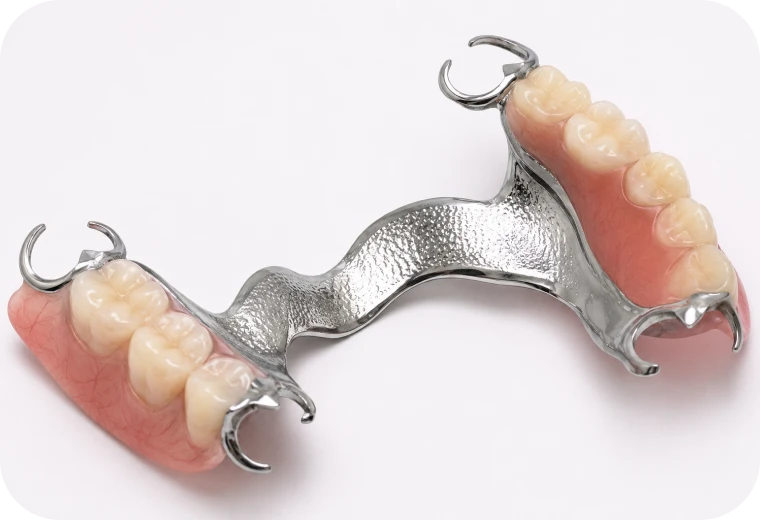
It helps to restore continuity in the dental arch, improve chewing and distribute support evenly. Whether it is indicated depends in particular on the condition of the remaining teeth, gum health and the scope for stabilising it.
The complete removable denture
A complete removable denture replaces all the teeth in one arch. It rests on the gums and the available bone contours.
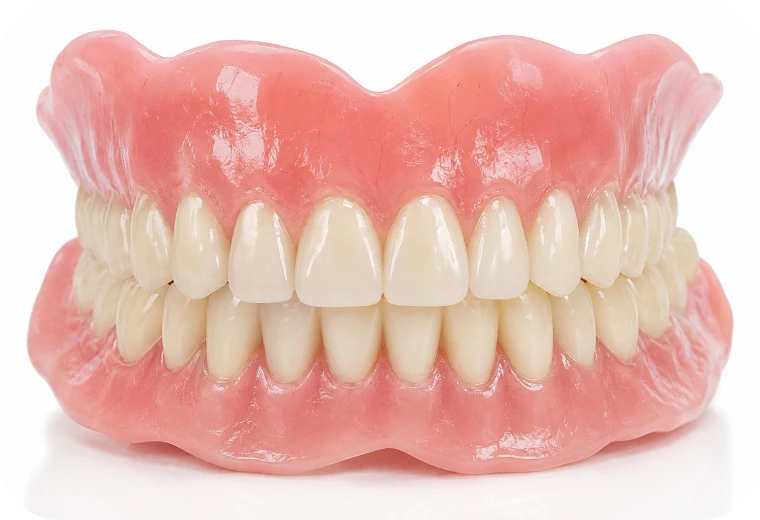
Fitting it takes several factors into account: the shape of the jaw, the condition of the tissues, bone volume, saliva flow, the balance of chewing and your daily habits. These are analysed carefully in order to design a denture suited to your situation.
When might a removable denture be considered?
A removable denture may be considered when several teeth are missing, when tooth loss is extensive or when fixed solutions are not indicated.
It may also be discussed when treatment needs to be organised in stages. In some situations, a temporary denture can cover a transition period before a definitive restoration is made.
The choice of treatment depends on the condition of the mouth, the tissues available, the scope for stabilisation and the comfort you are looking for. The assessment makes it possible to evaluate the various options and determine whether a removable denture is indicated.
The assessment before a removable denture
Before designing a removable denture, the practitioner examines the remaining teeth, the gums, the supporting tissues and how the jaws come together during chewing.
They also identify weakened teeth, sensitive areas, gum inflammation, imbalances in chewing and older dentures that no longer fit well. These factors must be taken into account before the restoration is designed.
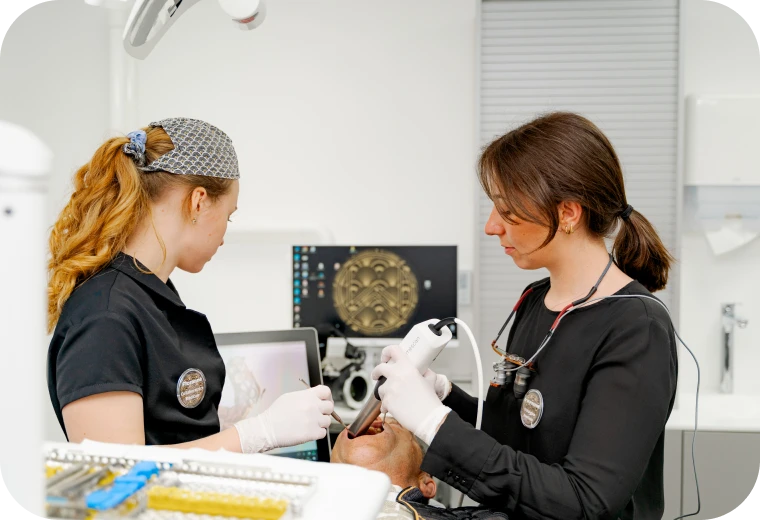
This analysis makes it possible to present the various options to you, with their indications and limitations, so that together we can define a denture consistent with your situation, your functional needs and the appearance you are looking for.
A denture designed for the balance of the mouth
A removable denture forms part of the mouth as a whole. Its volume, shape, supports and stability influence chewing, speech, facial support and day-to-day comfort.
The prosthetic teeth are chosen with their shade, shape, facial proportions and the balance of the arch in mind. The aim is a consistent aesthetic result without neglecting function.
A precise fit helps to distribute support better, limit areas of friction and reduce the strain placed on the supporting tissues.
Getting used to a removable denture
Wearing a removable denture often requires a period of adjustment. Sensations in the mouth, chewing, speech and your perception of the volume change gradually during the early days.
Adjustments may be needed to improve stability, correct certain contact points or reduce areas of discomfort. These adjustments are a normal part of denture follow-up.
Persistent discomfort, a denture that moves, irritation or difficulty chewing should be reported. A check-up then makes it possible to verify the fit and carry out any necessary adjustments.
Caring for a removable denture
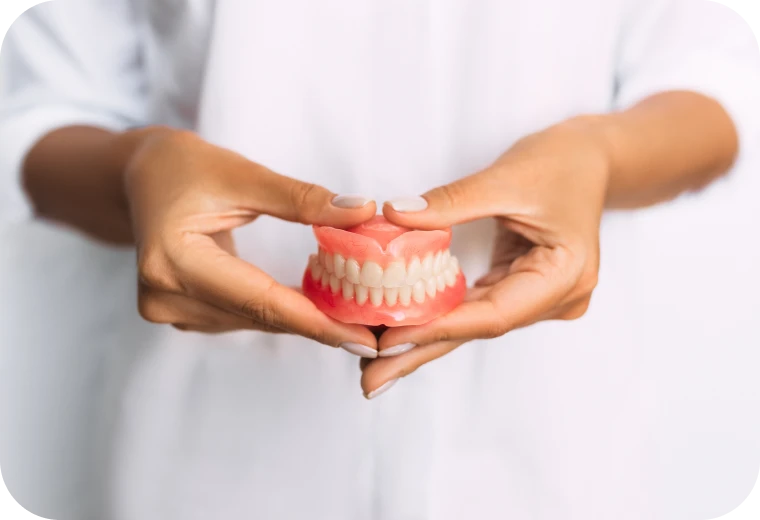
A removable denture requires daily care and long-term follow-up. It must be taken out and cleaned every day to limit plaque build-up, food deposits and the risk of irritating the soft tissues.
The remaining teeth, gums, tongue and soft tissues must also be cared for carefully. Even when a denture replaces several teeth, the health of the tissues that support it remains important for its stability and comfort.
Regular check-ups make it possible to verify the fit of the denture, the condition of the gums, the stability of the supports and any changes in the supporting tissues over time.
Attentive support during the adjustment period
Making a removable denture follows a defined pathway: assessment, impressions, design, try-ins, fitting, adjustments and follow-up. Each stage is explained so that you have a clear view of the treatment, its purpose and how it will proceed.
Beyond the technical work, our support rests on listening to your expectations, explaining things clearly and making precise adjustments. The first appointments after fitting allow the denture to be adjusted, your feedback to be heard and comfort to be improved gradually where needed.
Care advice, recommendations for your first meals and answers to your questions are all part of this adjustment period.
A consultation to assess the right solution
Missing teeth, an uncomfortable old denture, difficulty chewing or trouble wearing a denture: every situation needs careful assessment.
A consultation makes it possible to analyse the remaining teeth, the supporting tissues and chewing constraints. It also allows the various options to be considered according to the diagnosis made. This may be a partial denture, a complete denture or a temporary solution. Depending on the situation, a bridge, an implant-supported restoration or a combined solution may also be explored.

Frequently asked questions
What is the difference between a partial and a complete denture?
A partial denture replaces several teeth when natural teeth remain. A complete denture replaces all the teeth in one arch.
What determines the stability of a removable denture?
Its stability depends on the shape of the jaw, the condition of the tissues, the number of remaining teeth, the bone volume available and the precision of the fit. Adjustments may be needed.
Can an old removable denture be replaced?
Yes. When a denture becomes uncomfortable, unstable, worn or no longer fits well, a new denture can be considered.
How should a removable denture be cleaned?
It must be taken out and cleaned every day using suitable techniques. The remaining teeth, gums, tongue and soft tissues must also be cared for carefully.
Is a removable denture the only option for missing teeth?
Not always. Depending on the situation, a bridge, an implant-supported restoration or a combined solution may be discussed. The choice depends on the clinical assessment, the tissues available and your functional and aesthetic expectations.

