


Tooth whitening aims to reduce certain discolouration of the natural teeth while respecting the dental tissues. It changes neither the shape nor the position of the teeth, and it has no effect on existing restorations such as crowns, veneers or composites.
Before considering it, an assessment makes it possible to identify the origin of the discolouration and check the health of the teeth and gums. Decay, an inflamed gum or a cracked tooth must be treated first.
This assessment makes it possible to define what it is reasonable to expect from treatment. Not every shade and every stain responds in the same way. The aim is therefore whitening that is consistent with your smile, rather than a standardised colour.
What is tooth whitening?
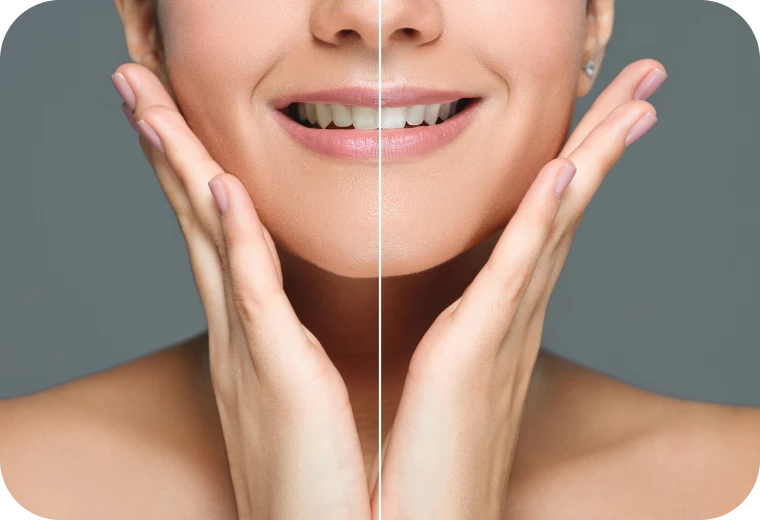
Tooth whitening acts on the natural shade of the teeth. It may be considered when they have gradually discoloured with time, through certain dietary habits, smoking or individual factors.
This treatment applies to natural teeth. It does not correct an irregular shape, wear or a restoration that has become visible. Those situations call for other treatments.
The choice therefore depends on the diagnosis. A surface deposit calls for a professional clean. A localised stain first requires its origin to be established: it may be decalcification, an enamel anomaly or a root-treated tooth, and these do not call for the same treatment. Whitening addresses general changes in shade, where the condition of the teeth and gums allows.
Why do teeth change colour?
The shade of the teeth changes naturally over time. Enamel can become more translucent and let more of the dentine show through, and its colour is more pronounced.
Certain habits can also encourage discolouration. Coffee, tea, red wine, tobacco or certain staining foods can gradually change the surface appearance of the teeth.
Other discolouration is linked to the history of a tooth. It can appear after an injury, certain treatments or a change in the structure of the enamel.

These situations do not all call for the same treatment. Understanding the origin of the discolouration guides how it should be managed.
The assessment before tooth whitening
Before starting whitening, the practitioner examines the teeth, the gums and any existing restorations. They assess the starting shade, how it is distributed across the smile and the nature of the discolouration observed.
They also check for decay, gum inflammation or significant sensitivity. Gum recession, a crack, an old restoration or a weakened area can influence the protocol and the precautions required.
This step helps distinguish surface discolouration from deeper discolouration. It also determines whether scaling, air polishing, treatment for staining or another procedure should be carried out before whitening.
Finally, the assessment allows us to explain the indications, the limitations and how treatment proceeds, in order to build a plan suited to your situation and your expectations.
Aiming for a shade consistent with your smile

Whitening does not aim at the same shade for every patient: every smile is unique and has its own colour. That colour depends on the enamel, the dentine and age, while how it is perceived varies with skin tone and the contrast with the lips. The resulting shade must therefore remain consistent with the face and the smile as a whole, not isolated from the rest.
The result depends on the starting shade and on how the tissues respond to treatment. That is why the objective is defined case by case, from the initial shade recorded before treatment, rather than by reference to a target shade. The change we aim for stays natural and suited to what the patient has asked for.
The effect on existing restorations
Crowns, veneers and composites do not whiten like natural teeth. Their presence must therefore be taken into account before starting treatment.
When a restoration is visible in the smile, its shade can influence the plan. Whitening the natural teeth can create a difference with a crown or composite that is already there.
The assessment makes it possible to anticipate this and explain the various options to you. Treatment is therefore considered across the whole smile, not just from the colour of a single tooth.
Whitening trays
Whitening can be carried out using custom-made trays designed from your mouth. They allow the product to be applied in a controlled way, following the practitioner’s instructions.
The product, its concentration, how long the trays are worn and how often they are used are determined according to your dental situation, the starting shade and any sensitivity you may have.
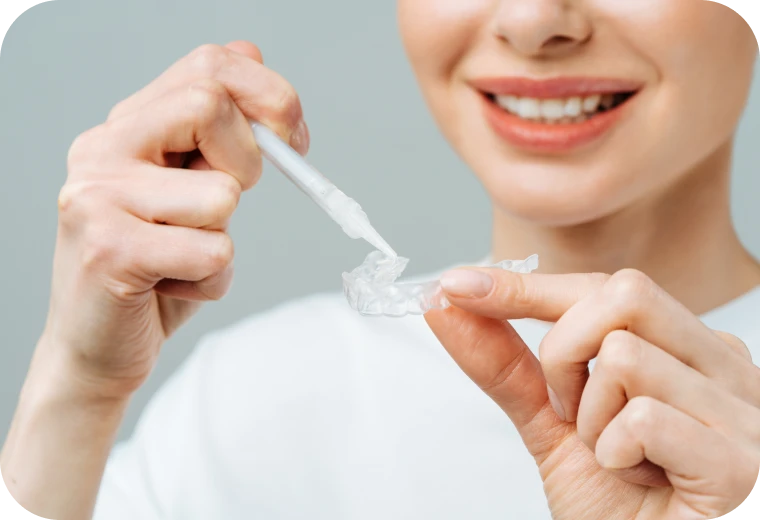
The instructions must be followed precisely. Whitening works gradually, and follow-up makes it possible to observe how the teeth respond and adjust the pace if necessary.
Tooth sensitivity and precautions
Sensitivity can appear during whitening. It depends in particular on the initial situation, the condition of the enamel, the presence of gum recession and any existing sensitivity.
The prior assessment makes it possible to identify more vulnerable areas and adapt the protocol. Recommendations can be given to limit discomfort and protect the teeth and gums.
Any unusual or persistent sensitivity should be reported. The practitioner can then review the situation and adjust how treatment is carried out.
Maintaining the shade after whitening

The shade achieved can change over time. Dietary habits, smoking, daily hygiene and the build-up of surface discolouration all influence how it develops.
Careful brushing, interdental cleaning and preventive appointments help limit plaque and surface deposits. Depending on the situation, scaling or air polishing may also be indicated.
Check-ups make it possible to monitor the condition of the teeth, the gums and any visible restorations. They also serve to adapt care advice as your smile changes.
Support from assessment to follow-up
Tooth whitening follows a gradual pathway. The assessment, making the trays, instructions for use and check-up appointments are explained beforehand so that you understand each stage.
Follow-up makes it possible to observe how the shade develops and to take any sensitivity into account. The pace can therefore be adapted to each patient.
Our support rests on listening to your expectations, explaining things clearly and giving a realistic view of what the treatment can achieve.
A consultation to assess whether whitening is indicated
A darker tooth, gradual discolouration or a wish to harmonise your smile: several situations can prompt a consultation about whitening.
The assessment makes it possible to identify the origin of the discolouration, evaluate the condition of the teeth and gums, and then check whether whitening is indicated or whether another approach should be considered.
Frequently asked questions
Is tooth whitening suitable for all teeth?
No. Whether it is indicated depends on the initial shade, the origin of the discolouration, the condition of the enamel, any sensitivity and the presence of visible restorations.
Do crowns, veneers or composites change colour?
No. These restorations do not whiten like natural teeth. Their presence must be taken into account before treatment in order to anticipate the balance of shades across the smile.
What is the difference between a professional clean and whitening?
A professional clean removes plaque, tartar and certain stains deposited on the surface of the teeth. Whitening acts on the shade of the natural teeth.
Can whitening cause sensitivity?
Sensitivity can occur in some patients. The assessment makes it possible to identify more vulnerable areas, and the protocol can be adapted according to what you feel during treatment.
How can you maintain the shade after whitening?
Regular hygiene, interdental cleaning, attention to the habits that encourage staining and preventive check-ups all help keep your teeth looking bright over time.

