


Preventive follow-up supports the health of your teeth and gums over time. It combines regular check-ups, an assessment of the risks specific to each patient, preventive treatment where indicated and tailored hygiene advice.
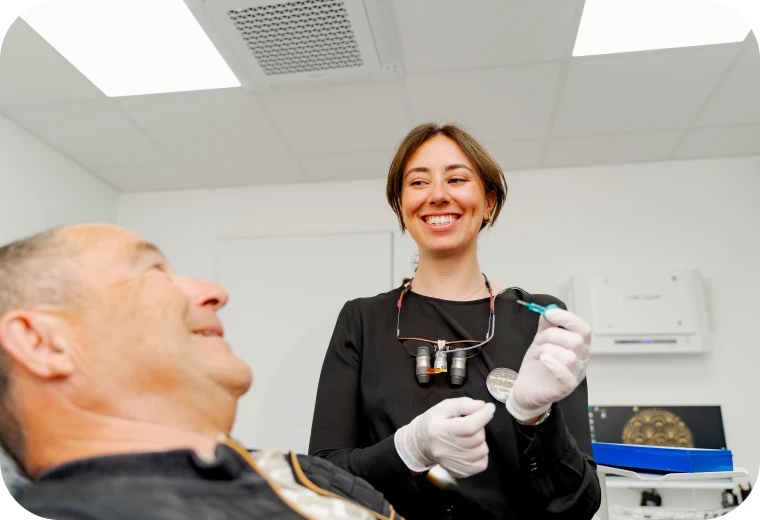
It does not follow the same frequency for everyone. How it is organised takes account of the condition of the teeth, gum health, existing restorations, your history and your daily habits. The aim is to monitor changes, protect the treatment already carried out and act where necessary.
What is preventive follow-up?
Preventive follow-up is a preventive approach organised over time. It makes it possible to examine the teeth, the gums, the restorations and the areas where dental plaque builds up most easily on a regular basis.
It is not limited to checking that nothing hurts. Some situations can develop quietly: early decay, gum inflammation, tartar build-up, wear or a weakened restoration are not always noticeable day to day.
Each appointment makes it possible to review what needs watching, adapt hygiene habits and determine whether preventive treatment is indicated.
Follow-up tailored to each patient’s risk
Preventive needs vary from patient to patient. Some people are more prone to decay, while others build up tartar, develop gum inflammation, staining or tooth sensitivity more readily.
The practitioner takes account of the condition of the teeth, gum health, any history of decay, the presence of restorations or implants, dietary habits and hygiene routines.
Age, the treatment you have had and any difficulty cleaning particular areas can also change these needs.
This analysis makes it possible to define a follow-up schedule suited to what is observed, rather than applying the same frequency to every patient.
Checking the teeth and restorations
Follow-up covers the natural teeth but also the treatment already carried out. An old filling, a crown, a bridge, a veneer or an implant-supported restoration may need regular monitoring.
The practitioner checks the condition of the restorations, the margins where they meet the teeth, the health of the surrounding tissues and their part in chewing.
The examination can reveal wear, leakage, weakness, discomfort or an area that has become harder to maintain.
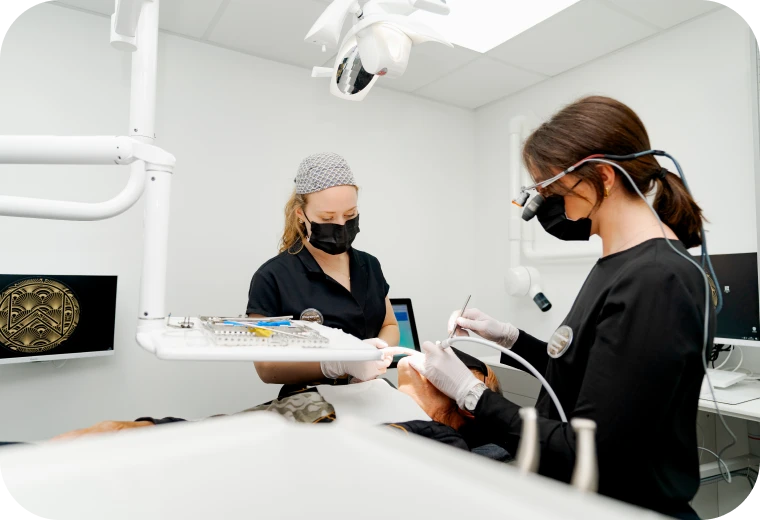
This monitoring helps protect the teeth and restorations over time. It also makes it possible to act proportionately when a change is noticed.
Checking gum health
The gums are very much part of preventive follow-up. Bleeding, redness, swelling, receding gums or persistent bad breath can point to inflammation.
The practitioner examines the condition of the tissues, the presence of plaque and tartar, and the areas where daily cleaning may be more difficult.
When signs of gingivitis or periodontitis are found, a more detailed assessment may be proposed in order to evaluate the supporting tissues and determine the appropriate care.
Follow-up then makes it possible to observe how the gums develop and adjust treatment or hygiene advice where necessary.
Associated preventive treatments
Depending on the situation, various treatments can be built into preventive follow-up.
Scaling can be carried out when tartar has built up. Air polishing may be indicated to remove certain surface stains and fine deposits. Fluoride treatment may be discussed when the enamel is weakened or the risk of decay is higher.
These treatments are not routine. Whether they are indicated depends on the clinical examination, the needs observed and how your oral health develops.
Follow-up therefore makes it possible to adapt prevention without carrying out procedures that would not be necessary.
Adapting daily hygiene habits
Preventive follow-up is also time devoted to looking at hygiene habits. Even with regular brushing, some areas can remain difficult to clean.
Gaps between the teeth, crowns, bridges, implants, a denture or braces may call for particular techniques or tools.

Depending on your situation, a soft brush, interdental brushes, dental floss or other cleaning aids may be recommended.
The techniques are explained and then adjusted with you. The aim is to build an effective routine, suited to your mouth and simple enough to keep up over time.
Follow-up that evolves with your situation
Preventive needs do not necessarily stay the same over the years. They can change with age, with the treatment you have had, with lifestyle, with the condition of your gums or with new restorations.
Follow-up makes it possible to adapt recommendations, treatment and appointment frequency gradually.
Someone at low risk may need check-ups further apart. Gum inflammation, repeated decay, periodontitis, implants or numerous restorations may justify closer support.
This way of working makes it possible to track how your mouth develops and preserve the balance achieved after treatment.
A care relationship built over time
Preventive follow-up rests on continuity between appointments. The team gets to know your history, your sensitivities, your habits and the areas that need particular attention.
This knowledge makes it possible to tailor explanations and to spot changes since previous check-ups more easily.
Every appointment is also a chance to ask questions, mention any discomfort and revisit the habits that remain difficult day to day.
This ongoing relationship helps you understand your oral health better and stay fully involved in looking after it.

A consultation to organise suitable follow-up
Risk of decay, recurring tartar, sensitive gums, implants, restorations to monitor or difficulty cleaning certain areas: several situations may call for personalised preventive follow-up.
A consultation makes it possible to assess the teeth, the gums, existing restorations and your hygiene habits. It then allows us to define any treatment, tailored advice and the follow-up schedule that suits your situation.
Frequently asked questions
What is preventive follow-up?
Preventive follow-up is preventive support organised over time. It makes it possible to monitor the teeth, the gums, the restorations and hygiene habits, then adapt advice and treatment as needed.
Who is preventive follow-up for?
It can apply to all patients. Particular attention may be needed in cases of decay risk, recurring tartar, gum inflammation, periodontitis, implants or restorations that need monitoring.
What is the difference between a routine check-up and preventive follow-up?
A check-up examines the general condition of the mouth. Preventive follow-up works more over the long term, with a risk assessment, adapted hygiene habits and preventive treatment where indicated.
Which treatments can be part of preventive follow-up?
Depending on the situation, scaling, air polishing, fluoride treatment or personalised hygiene advice may be offered. The choice depends on the assessment and the needs observed.
How often should preventive follow-up take place?
The frequency depends on the condition of the teeth, gum health, existing restorations and each patient’s individual risks. It is defined after the assessment and then adjusted as things develop.

