


Gingivitis and periodontitis are two inflammatory diseases affecting the gums. They must be distinguished, because they affect the tissues differently and do not require the same level of care.
Gingivitis remains limited to the gum. Periodontitis affects the tissues that support the teeth more deeply. An assessment makes it possible to understand the origin of the inflammation, evaluate its extent and define the treatment suited to each situation.

What is the difference between gingivitis and periodontitis?
Gingivitis is a surface inflammation of the gum. It often shows as redness, bleeding when brushing, tenderness or localised swelling. At this stage, the deeper supporting tissues are not yet affected.
Periodontitis is a more advanced condition. The inflammation no longer affects only the visible gum. It also involves the tissues that hold the teeth in place, in particular the bone and the periodontal ligament.
Over time, this can lead to receding gums, loose teeth or a change in the way you chew. The absence of pain does not rule out periodontal disease, because it can progress quietly.
These two conditions often have something in common: a build-up of dental plaque and bacteria on the teeth and gums. Other factors can also play a part, such as smoking, certain general health conditions, family history, stress or difficulty cleaning particular areas.
Which signs should draw your attention?
Gum inflammation can develop gradually. The first signs are sometimes subtle, but they are worth taking seriously.
The most common symptoms are:

- bleeding when brushing;
- red or swollen gums;
- tender gums;
- persistent bad breath;
- the impression that the gum is receding;
- loose teeth in more advanced cases.
Gums that bleed regularly are not something to ignore. This often indicates inflammation that should be assessed, even in the absence of pain.
The presence of one or more of these signs is not enough on its own to tell gingivitis from periodontitis. A clinical examination makes it possible to assess the tissues involved and measure the extent of the inflammation.
Why can gingivitis develop into periodontitis
When dental plaque stays in contact with the gums, it sustains the inflammation. Over time it can mineralise into tartar, which in turn encourages bacteria to accumulate.
If the inflammation persists, the supporting tissues can be affected more deeply. Periodontal pockets can then form between the tooth and the gum. These spaces become harder to clean day to day and can sustain the progression of the inflammation.
Not all gingivitis develops into periodontitis. Persistent inflammation should nevertheless be taken seriously. An assessment makes it possible to check whether the condition is still limited to the gum or whether the supporting tissues are also involved.
The periodontal assessment
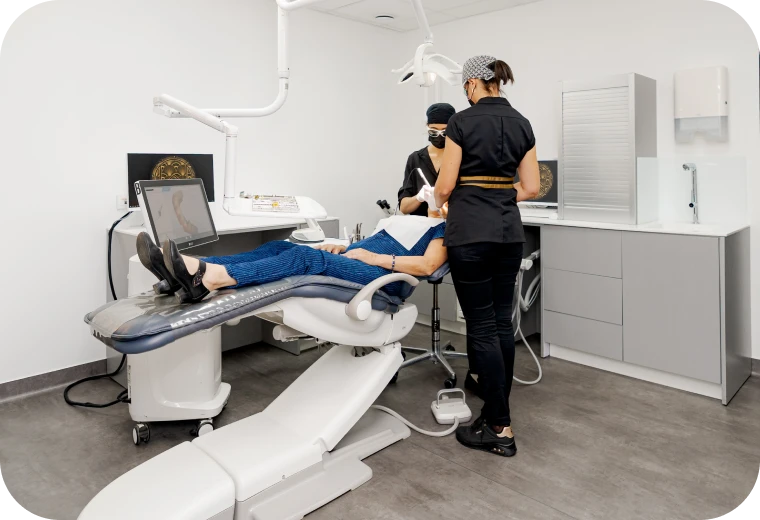
The periodontal assessment makes it possible to analyse the health of the gums and the tissues that support the teeth. It helps distinguish gingivitis from early or more advanced periodontitis.
The examination includes inspecting the gums, measuring the periodontal pockets and assessing bleeding, tooth mobility, plaque and tartar. X-rays complete this analysis in order to judge the condition of the bone around the teeth.
The practitioner also takes account of your hygiene habits, your medical history, your general health and the factors likely to sustain the inflammation.
This step makes it possible to understand the origin of the problem, measure its extent and explain the various treatment options to you.
Which treatments can be considered?
Treatment depends on the diagnosis and the depth of the condition.
With gingivitis, a professional clean, scaling and personalised hygiene advice can help reduce the inflammation. Daily habits are adapted to the areas where plaque builds up most easily.
With periodontitis, more in-depth care may be needed. It requires cleaning beneath the gum in order to remove the deposits present in the periodontal pockets and limit the progression of the inflammation.
How the tissues respond is then reassessed. When certain areas remain difficult to stabilise, further treatment can be discussed depending on the condition of the gums, the bone and the teeth involved.
No treatment is routine. The choice depends on the extent of the inflammation, the depth of the pockets, the health of the tissues and your overall situation.
The role of daily hygiene
Daily hygiene plays an essential role in the health and stability of the gums. Brushing must be regular, gentle and suited to your situation.
Interdental cleaning matters just as much. A toothbrush is not always enough to reach the spaces between the teeth, where plaque can easily build up.
Depending on the shape of these spaces, interdental brushes, dental floss or other tools may be recommended. The aim is not to multiply the tools but to use those that genuinely suit the state of your gums.
The techniques are explained and adjusted with you so that they fit easily into your daily routine.

Keeping your gums healthy over time
Gingivitis and periodontitis require regular attention. Even after an improvement, the gums can become inflamed again if plaque builds up or if certain factors persist.
Follow-up makes it possible to check the condition of the gums, spot signs of returning inflammation and adjust treatment if necessary. It also helps protect the teeth, existing restorations and the balance of chewing.
This monitoring is particularly important with periodontitis. The stability of the tissues depends on the treatment carried out, daily hygiene and regular check-ups.
Support at every stage
Gum disease often takes hold silently. Finding out about it is often unexpected and can raise questions or concerns.
Care begins with an initial conversation to understand the situation and guide the diagnosis: how long the bleeding has been going on, family history, smoking, general health conditions and hygiene habits. These factors determine the treatment protocol.

The diagnosis and the various stages of treatment are then explained clearly. Follow-up is organised according to how the gums develop. Hygiene advice is adapted from one appointment to the next, and any questions can be raised at every stage.
This long-term support is very much part of the treatment and helps maintain the results achieved.
A consultation to assess the health of your gums
Bleeding when brushing, swollen gums, receding gums or persistent bad breath: several signs can point to gingivitis or periodontitis.
A consultation makes it possible to examine the gums, assess the supporting tissues and determine which treatment is indicated according to the diagnosis.
Frequently asked questions
What is the difference between gingivitis and periodontitis?
Gingivitis mainly affects the visible gum. Periodontitis affects the tooth’s supporting tissues more deeply, in particular the bone and the periodontal ligament.
Is bleeding from the gums normal?
No. Repeated bleeding when brushing usually indicates gum inflammation. An examination makes it possible to look for the cause and check the condition of the tissues.
Can gingivitis go away?
Gingivitis can improve when dental plaque is controlled and hygiene is adapted. Scaling and personalised advice may be needed.
Can periodontitis make teeth move?
Yes, in advanced cases. When the supporting tissues are affected, some teeth can become loose. A periodontal assessment makes it possible to evaluate the situation.
How can gum inflammation be prevented?
Prevention rests on regular brushing, suitable interdental cleaning and regular check-ups. These habits help limit the build-up of plaque and tartar.

