


Treating periodontitis aims to control inflammation in the tissues that support the teeth and to stabilise the progression of the disease. It rests on a precise periodontal assessment followed by treatment suited to the extent of the condition.
Care is not limited to a one-off clean. It combines treatment at the practice, adapting daily hygiene and regular follow-up, in order to protect the teeth, the gums and the balance of chewing.
What does treating periodontitis involve?
Periodontitis is an inflammatory disease affecting the gum, the bone and the other tissues that hold the teeth in place. As it progresses, it can lead to receding gums, loose teeth or a change in the way you chew.

Treating periodontitis means identifying the affected areas, reducing the bacteria beneath the gum and controlling the inflammation. Treatment then aims to stabilise the tissues and limit the progression of the disease.
Care depends on each situation. It takes account of the depth of the periodontal pockets, the condition of the bone, tartar beneath the gum, your hygiene habits, the factors that may sustain inflammation and your general health.
The periodontal assessment before treatment
Before defining the treatment, a periodontal assessment makes it possible to evaluate precisely the health of the gums and supporting tissues.
The examination may include measuring the periodontal pockets, noting any bleeding, assessing tooth mobility and analysing plaque and tartar. X-rays can complement this assessment in order to judge the condition of the bone around the teeth.
The practitioner also takes account of your medical history, your general health, your hygiene habits and any risk factors.
This step makes it possible to identify the areas that need treatment, explain the different phases of care to you and organise follow-up according to the extent of the condition.
Controlling the inflammation
The first stage of treatment is to reduce inflammation in the gums. This means limiting the build-up of dental plaque and tartar that sustain the bacteria.
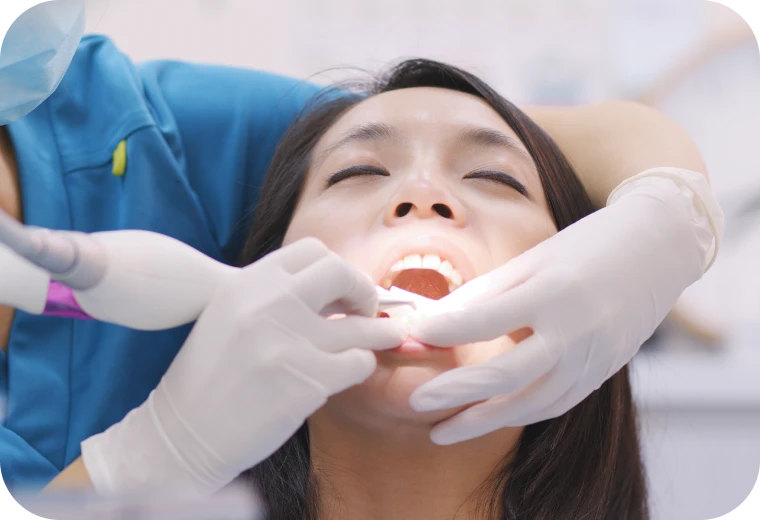
Scaling can be carried out when deposits sit above the gum. When periodontitis is more advanced, cleaning beneath the gum may be needed in order to reach the areas inside the periodontal pockets.
The aim is to restore a healthier environment around the teeth, encourage the gums to respond to treatment and limit the progression of the disease.
Root planing
Root planing is carried out beneath the gum. It involves cleaning the root surfaces in order to remove bacterial plaque and tartar deposits present in the periodontal pockets.
Treatment can be carried out by section depending on how extensive the condition is. How it is organised depends on the assessment, the depth of the pockets and the number of areas involved.
After root planing, the gums are reassessed to see how they have responded to treatment. This reassessment makes it possible to measure how the inflammation has changed, check the depth of the pockets and determine whether further treatment is needed.
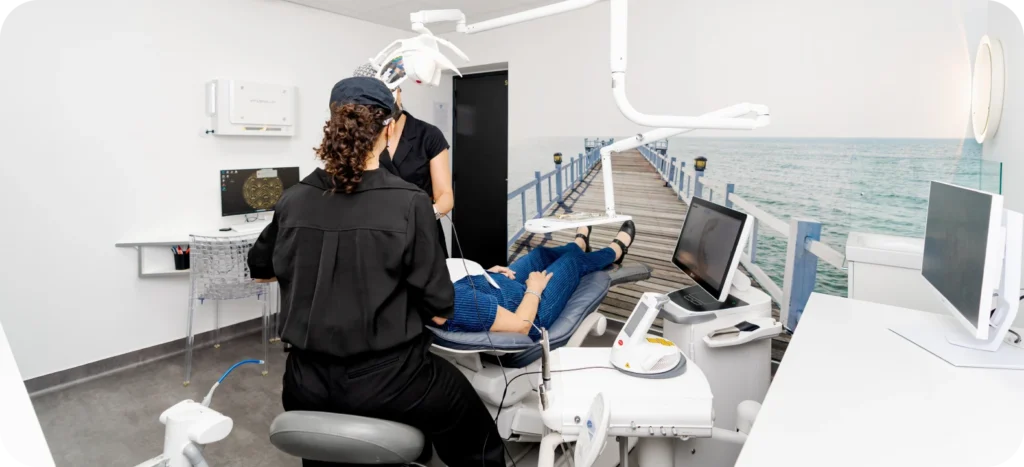
The role of daily hygiene
Treatment at the practice cleans the deep areas, but stable gums also depend on regular, suitable daily habits.
Brushing must be careful, gentle and use the right technique. Interdental cleaning is also essential, because bacteria build up easily between the teeth and in hard-to-reach areas.
Depending on the situation, interdental brushes, dental floss or other tools may be recommended. This advice is adjusted to the shape of the teeth, the gaps between them and the condition of the gums.
The aim is to help you establish habits that are effective and simple enough to keep up over time.
The factors that influence periodontitis
Dental plaque plays a central role in periodontitis, but other factors can influence how it develops.
Smoking, certain general health conditions, hormonal changes, stress, family history or difficulties with hygiene can make the tissues more vulnerable or harder to stabilise.
These factors are taken into account during the assessment. They help us understand the situation better and adapt treatment, advice and the pace of follow-up.
Treatment therefore does not rest on a one-off procedure. It forms part of overall care addressing the factors that sustain inflammation.
Reassessing the gums after initial treatment
After the first phases of treatment, a reassessment makes it possible to observe how the tissues have responded.
The practitioner checks bleeding, pocket depth, the presence of plaque, any looseness of the teeth and the areas that remain difficult to stabilise.
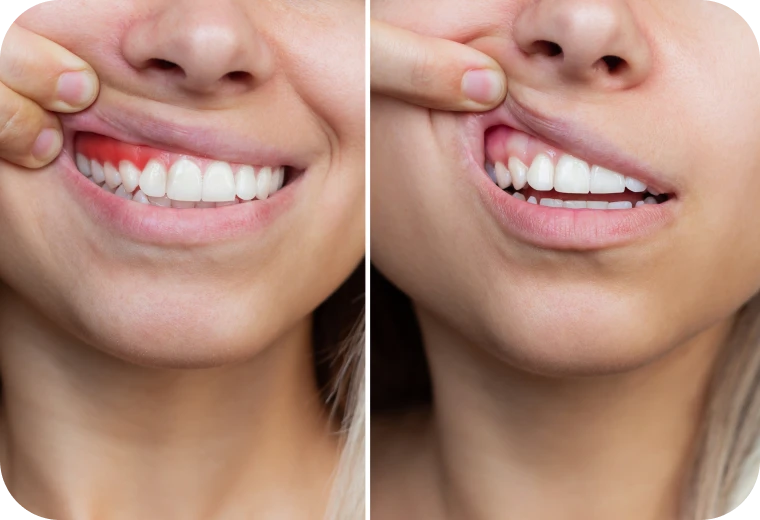
This step makes it possible to verify the improvements achieved and adapt the rest of the treatment. Some areas may simply need closer follow-up. Others may require additional treatment depending on the condition of the gums and the bone.
When is periodontal surgery considered?
In some situations, non-surgical treatment is not enough to stabilise deep areas. Periodontal surgery may then be discussed.
It can allow more precise access to areas that are difficult to clean, treat certain bone defects or improve the gum environment around the teeth.
This option is not routine. It depends on the response to initial treatment, the condition of the tissues and the objectives defined at the reassessment.
Follow-up after periodontal treatment
Periodontitis requires regular monitoring. Even after an improvement, inflammation can return if plaque builds up or if certain factors persist.
Follow-up appointments make it possible to check the condition of the gums, measure how the pockets are changing and monitor the more vulnerable areas. They also allow hygiene advice to be adjusted and action to be taken if signs of inflammation return.
This continuity helps protect the teeth, the supporting tissues, existing restorations and the balance of chewing.
Attentive support throughout treatment
Treating periodontitis takes time. Each phase is explained so that you understand its purpose, how it proceeds and where it fits in the treatment pathway.
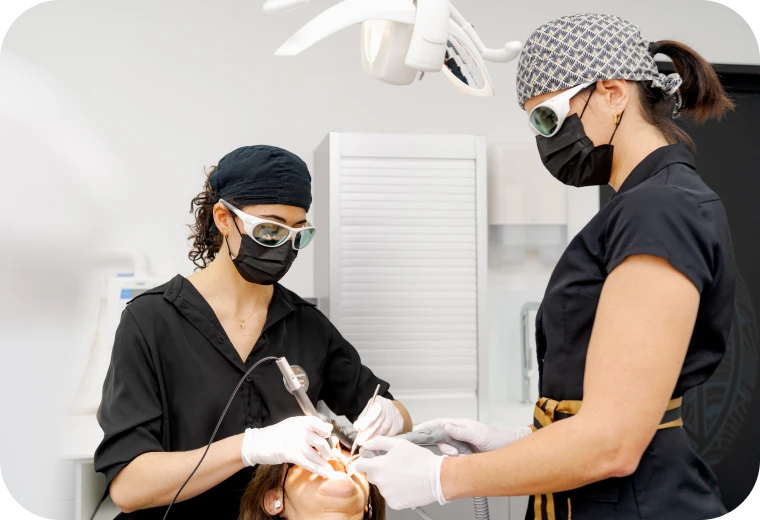
Debridement means removing tartar and subgingival biofilm, over one or more appointments depending on how extensive the condition is. A reassessment is scheduled a few weeks later and determines whether further treatment is needed. Then comes maintenance, and how regularly you attend determines how stable the result remains.
Support from the whole team throughout this process rests on listening to your questions, explaining things clearly and gradually adapting hygiene advice. This way of working makes it possible to move forward step by step and gives you clear guidance to help keep your gums stable.
A consultation to define the right treatment
Repeated bleeding, inflamed gums, receding gums or loose teeth: several signs can prompt a periodontal assessment.
A consultation makes it possible to assess the gums, the supporting tissues and the factors sustaining inflammation. It then allows us to define the appropriate treatment and organise follow-up to suit your situation.
Frequently asked questions
What is the aim of periodontitis treatment?
Treatment aims to reduce inflammation, clean the affected areas beneath the gum and stabilise the tissues that support the teeth.
What is root planing?
Root planing is a deep clean of the root surfaces carried out beneath the gum. It aims to remove the deposits and bacteria present in the periodontal pockets.
Can periodontitis come back after treatment?
Inflammation can return if plaque builds up or if certain factors persist. Regular follow-up and daily hygiene are therefore essential to monitor the gums over time.
Does every patient with periodontitis need surgery?
No. Periodontal surgery is only considered in certain situations, when non-surgical treatment is not enough to stabilise particular areas.
How should you look after your gums after periodontal treatment?
Care rests on suitable brushing, regular interdental cleaning and periodontal check-ups. The techniques are personalised according to the condition of the gums and the gaps between the teeth.

