


Inlays, onlays and overlays make it possible to restore a weakened tooth when tissue loss is significant but the tooth can still be kept.
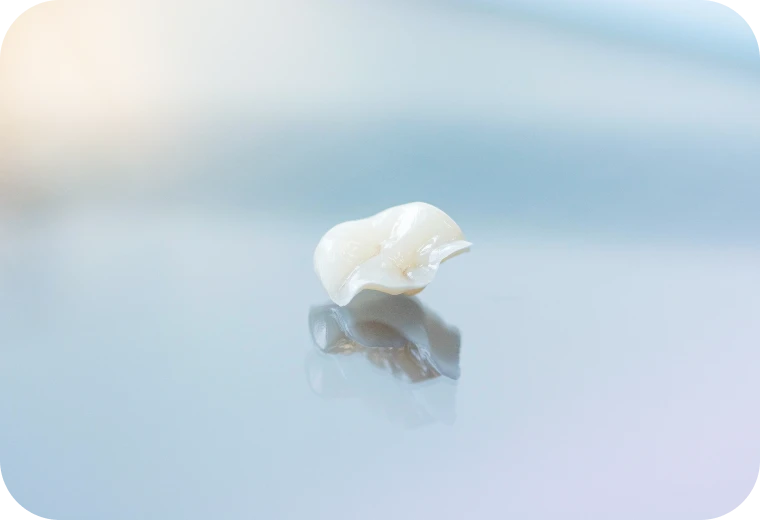
These restorations are custom-made to strengthen the tooth, preserve the healthy tissue that remains and restore comfortable everyday chewing. The choice between an inlay, an onlay or an overlay depends on many factors: the extent of the tissue loss, the strength of the remaining walls, whether the tooth is still vital, its role in chewing and how it meets the opposing teeth.
What are inlays, onlays and overlays for?
An inlay, onlay or overlay replaces the weakened part of the tooth with precision. It is a ceramic piece made from a digital impression and then fitted to the tooth concerned.
This solution is part of a conservative approach to treatment. It aims to restore the function of the tooth without covering more of it than necessary.
What is the difference between an inlay, an onlay and an overlay?
These three restorations address similar situations, but which one is indicated depends on the part of the tooth that needs rebuilding.
The inlay
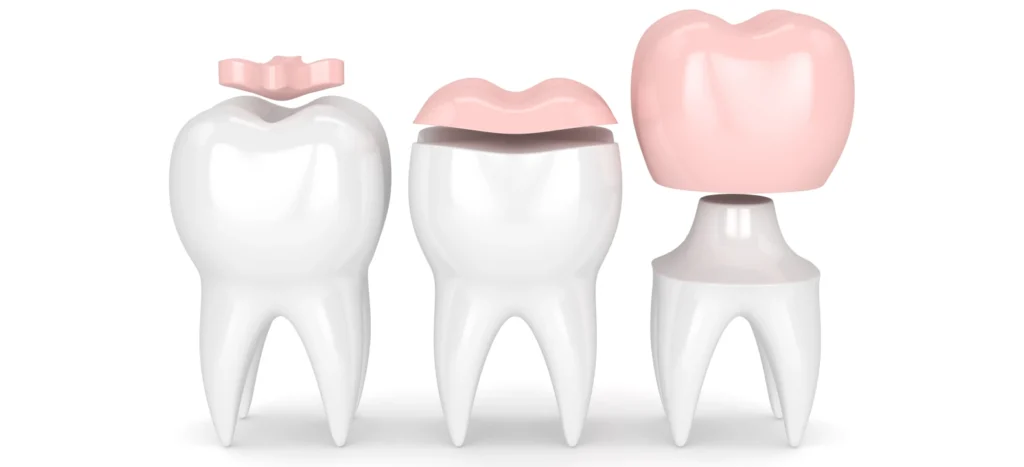
An inlay restores an area inside the tooth without covering its points, known as cusps. It may be indicated when the cavity is too large for a composite resin restoration but the walls of the tooth remain strong enough.
The onlay
An onlay restores a more extensive part of the tooth. It can cover one or more cusps when these have been weakened. This option helps to strengthen the tooth while preserving the healthy tissue that remains.
The overlay
An overlay covers a larger surface of the tooth. It may be considered when several parts of the tooth need protecting without necessarily resorting to a full crown.
Preserving the tooth as far as possible
One of the advantages of inlays, onlays and overlays is that they preserve as much of the tooth’s natural structure as possible. Unlike restorations that cover more of the tooth, they rebuild only the weakened areas.
This approach requires a precise analysis of the tooth: the extent of the lesion, the strength of the remaining tissue, how close the nerve is, older restorations, the bite and your chewing and hygiene habits.
The choice of treatment therefore depends on the condition of the tooth but also on its role in the balance of the mouth. The aim is a restoration that is stable, consistent and suited to your situation.

The assessment before a restoration
Before making an inlay, an onlay or an overlay, the practitioner examines the tooth concerned and its surroundings. They assess the extent of the tissue loss, the quality of the remaining tooth structure, whether the tooth is still vital and its part in chewing.
X-rays can complement this clinical examination. They reveal what is not always visible directly in the mouth: the depth of decay, the condition of an older restoration, how close the pulp is, or the state of the roots and the bone around the tooth. They therefore help confirm that the tooth can reliably be rebuilt with an inlay, an onlay or an overlay.
The choice of treatment therefore depends on the tooth itself but also on its role in the overall balance of the mouth.
Choosing the material
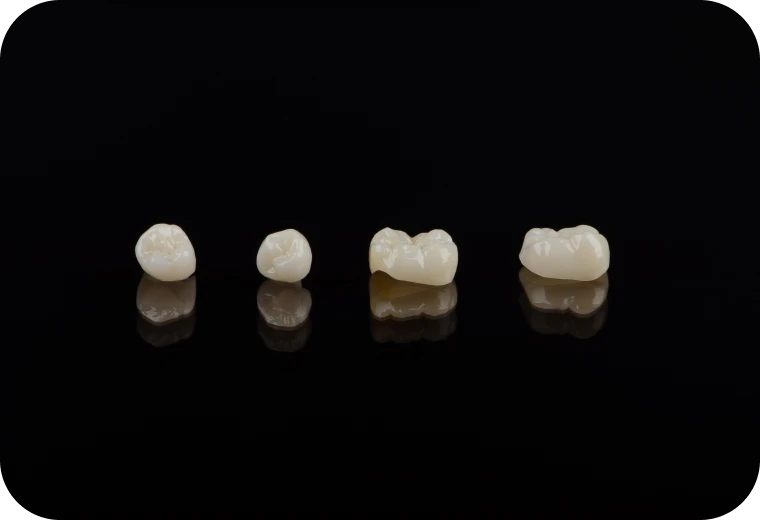
Inlays, onlays and overlays are made of ceramic. It is the material that behaves most like enamel: it transmits light in the same way, which gives it a natural translucency, and it responds to chewing forces like the tissue it replaces. Its shade does not change over time.
The key is to choose a material suited to the tooth, its position and the forces it has to withstand.
A restoration designed for chewing
A restoration should not simply fill a loss of tissue. It must also respect the way the teeth meet during chewing.
The shape of the inlay, onlay or overlay is therefore adjusted carefully. Contacts with the neighbouring teeth are checked in order to avoid overloading or discomfort.
This precision helps restore more balanced, comfortable everyday function. It also helps protect the tooth over time.
Caring for an inlay, onlay or overlay
A tooth restored with an inlay, onlay or overlay needs the same care as a natural tooth. While the ceramic restoration cannot decay, the remaining tooth tissue is still vulnerable to bacteria and to further decay.
Careful daily hygiene combined with regular check-ups at the practice helps to preserve the quality of the fit between the tooth and the restoration. It also helps maintain the result over time.
Attentive support at every stage
Making an inlay, an onlay or an overlay follows a defined pathway. Each phase is planned so that you have a clear view of the treatment, its purpose and how it will proceed. Before preparing the tooth, the practitioner explains why it is indicated: what the restoration allows you to keep, what distinguishes it from the other options and how long to allow.

The practice designs and mills its restorations on site. Where the situation allows, the inlay, onlay or overlay is therefore made and fitted the same day. The impression is taken with an intraoral scanner, the piece is designed and milled at the practice, and bonded in the same appointment.
Some situations require a dental laboratory, and the reason is explained at the time. The precautions to follow are given to you in writing.
Beyond the technical work, our support rests on listening to your expectations and concerns, explaining things clearly, and care provided by the whole practice team.
A consultation to assess the right restoration
Extensive decay, a fracture or a large old restoration weaken the tooth and may lead to it being rebuilt. Any difficulty with chewing warrants an examination.
The consultation establishes the condition of the tooth, the thickness of the remaining walls, whether it is still vital and how it relates to the neighbouring and opposing teeth. The diagnosis points towards an inlay, an onlay, an overlay, or another restoration when the breakdown is more advanced.
Frequently asked questions
What is the difference between an inlay and an onlay?
An inlay restores an area inside the tooth. An onlay covers a more extensive part and can protect one or more cusps when these have been weakened.
When is an overlay recommended?
An overlay may be considered when the tooth has lost more substance but can still be kept without resorting to a full crown.
Can an inlay replace an old filling?
Yes, in some situations. When an older restoration is damaged, leaking or too large, an inlay, onlay or overlay can be discussed after an examination.
Are these restorations always possible?
No. Whether they are indicated depends on the condition of the tooth, how much tissue remains, whether the tooth is still vital and the balance of chewing.
How should an inlay, onlay or overlay be cared for?
Care relies on careful brushing, cleaning between the teeth and regular check-ups. The join between the tooth and the restoration must be kept clean to limit the risk of leakage.

