

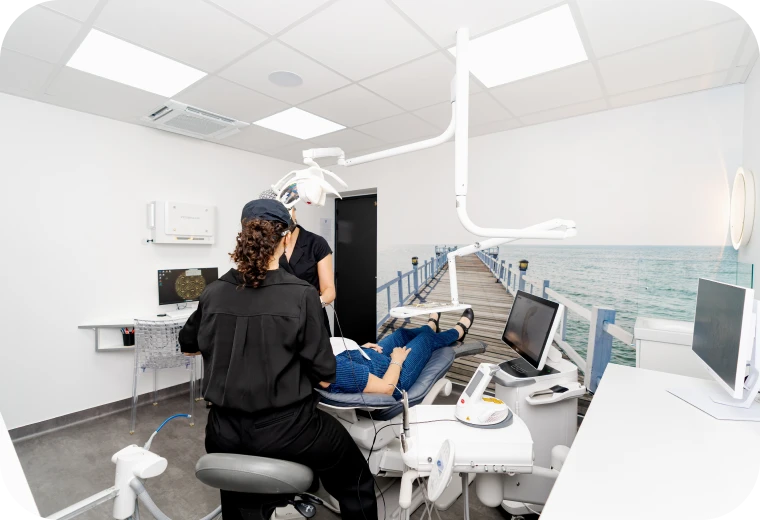
Scaling and air polishing are professional treatments intended to remove certain deposits from the teeth. They help prevent gum inflammation and maintain the mouth when they are suited to the situation.
Scaling removes the tartar that can no longer be cleared by brushing. Air polishing works on certain surface stains and finer deposits. An assessment determines which treatment is needed, based on the condition of the teeth, the gums and any restorations.
What are scaling and air polishing for?
Scaling removes the tartar built up on the teeth and sometimes below the gum margin. Tartar is mineralised dental plaque that sticks to the tooth surfaces.
Air polishing can complement this treatment. It uses a jet of air, water and a suitable powder to remove certain surface stains and fine deposits.
These treatments are not only about how the teeth look. They also help reduce the deposits that sustain gum inflammation and make daily hygiene easier.
Why does tartar form?
Dental plaque is a deposit made up of bacteria that forms naturally on the teeth during the day. It can build up more easily between the teeth, near the gums, behind the lower front teeth or around certain restorations.
When it is not removed regularly, plaque can mineralise and turn into tartar. Once formed, this sticks to the surface of the teeth and can no longer be removed with a toothbrush.
A build-up of tartar can lead to bleeding, redness, tender gums, bad breath or more persistent inflammation.
The amount of tartar varies from patient to patient. It depends in particular on saliva, hygiene habits, the position of the teeth and whether there are areas that are difficult to clean.
The assessment before a professional clean
Before carrying out scaling or air polishing, the practitioner examines the condition of the teeth and gums. They note the amount of tartar, the plaque, any staining, sensitive areas and the condition of existing restorations.
This step makes it possible to distinguish a simple tartar deposit from more marked gum inflammation or periodontal disease, which requires different treatment.
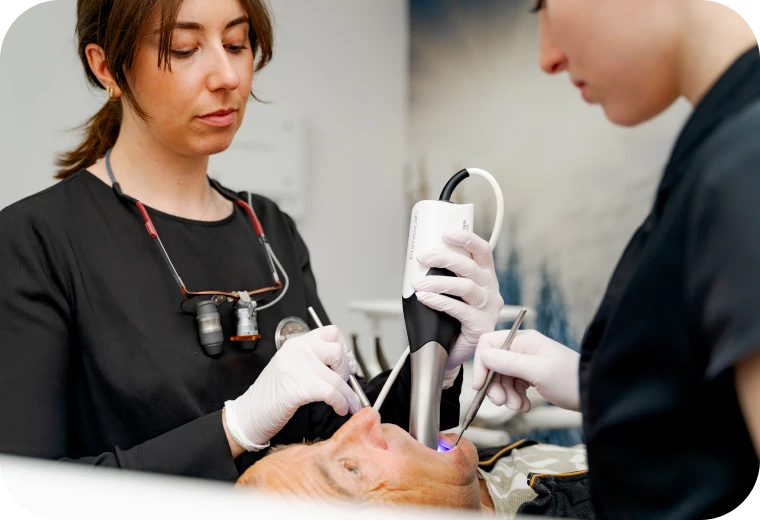
The practitioner also takes account of any sensitivity you may have, gum recession, implants, crowns, bridges or braces.
The assessment therefore helps tailor the treatment, identify areas where daily hygiene could be improved and determine whether particular follow-up should be arranged.
Dental scaling
Scaling means removing the tartar deposits present on the teeth. It is carried out with instruments chosen according to the amount of tartar, where it is and any sensitivity you may have.
The treatment focuses in particular on the areas where deposits build up most easily. It can be completed with polishing to smooth the tooth surfaces and remove any remaining residue.
When deposits are associated with deeper inflammation or with periodontal pockets, scaling alone may not be enough. A periodontal assessment and specific treatment may then be considered, depending on the diagnosis.
Scaling is therefore part of care tailored to the actual condition of the teeth and gums. It does not follow the same protocol for every patient.
Air polishing
Air polishing removes certain surface stains deposited on the teeth. It may be indicated when these are linked to coffee, tea, tobacco, certain staining foods or a build-up of fine deposits.
Air polishing therefore does not have the same effect as tooth whitening. It can make surfaces look cleaner by removing certain external stains, but it does not change the internal colour of the tooth.
Whether it is indicated depends on the condition of the enamel, the gums, any restorations and any sensitivity you may have.
Scaling, air polishing and gum health
Tartar close to the gums can sustain inflammation. The tissues may then become red, swollen or tender, or bleed when brushing.
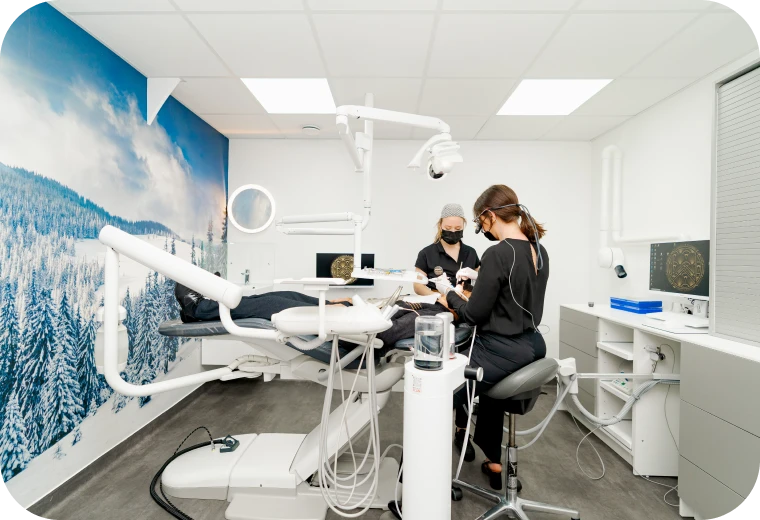
A professional clean helps reduce the deposits around the teeth and create an environment that is easier to maintain day to day.
Treatment at the practice must nevertheless be combined with regular hygiene habits. If plaque builds up again, inflammation can return and tartar can gradually re-form.
When bleeding persists, the gums recede or the supporting tissues are weakened, a periodontal assessment may be needed to evaluate the situation more precisely.
Adapting hygiene habits after treatment
After scaling or air polishing, the practitioner can show you the areas where plaque and tartar build up most easily.
Brushing should remain regular, gentle and thorough enough. Interdental cleaning complements brushing in the spaces a toothbrush cannot reach properly.
Depending on the shape of your teeth, the size of the gaps between them and any restorations, a soft brush, interdental brushes, dental floss or other tools may be recommended.
The aim is to establish habits suited to your mouth and simple enough to keep up over time.
Treatment as part of preventive dental care
Scaling and air polishing form part of a broader preventive approach. They make it possible to clean the tooth surfaces, observe the condition of the gums and adjust hygiene advice.
How often these treatments are needed depends on each situation. Some patients build up little tartar, while others need closer follow-up because of their gum health, their restorations, orthodontic treatment, implants or a periodontal risk.
Follow-up makes it possible to adapt treatment to how the mouth develops, rather than applying the same frequency to every patient.
It also helps monitor the natural teeth, the gums and any treatment already carried out.
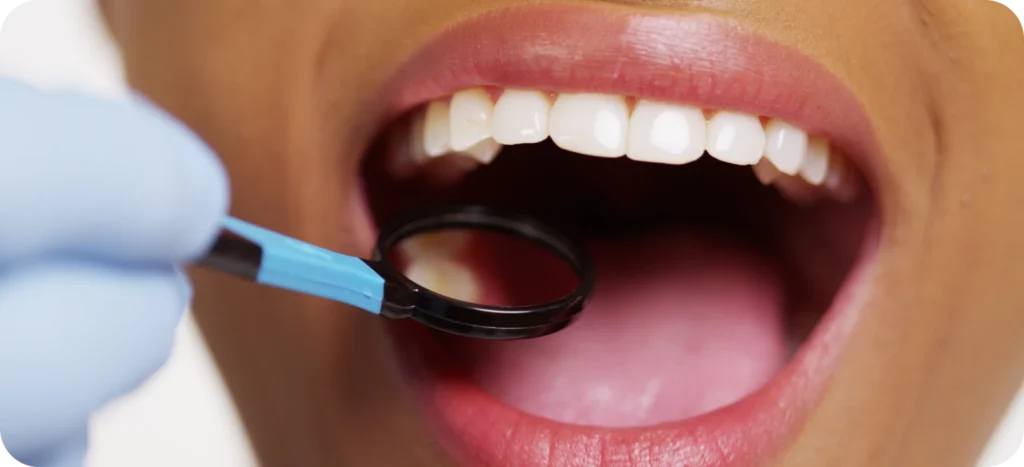
Treatment adapted to sensitivity
Scaling and air polishing are carried out with any sensitivity you may have in mind.
You can point out a sensitive area or any discomfort at any time. Listening to you allows the treatment to be adjusted according to how you feel and the condition of the tissues.
After the clean, we take time to review the health of your gums, the areas to watch and the hygiene habits to focus on.
This is very much part of the treatment and helps extend its benefits day to day.
A consultation to assess the right treatment
Visible tartar, bleeding gums, surface staining, persistent bad breath or teeth that feel less smooth: several situations can prompt a professional clean.
A consultation makes it possible to examine the teeth, the gums and any restorations. It determines whether scaling, air polishing or another approach is indicated according to the diagnosis.
Frequently asked questions
What is dental scaling for?
Scaling removes the tartar built up on the teeth. It helps limit the deposits that sustain gum inflammation and makes daily care easier.
What is the difference between scaling and air polishing?
Scaling removes mineralised tartar. Air polishing removes certain surface stains and fine deposits from the surface of the teeth.
Does air polishing whiten teeth?
No. Air polishing does not change the natural shade of the teeth. It can improve how their surface looks by removing certain external stains.
Why does tartar come back despite brushing?
Some areas are harder to clean, and plaque can gradually mineralise there. Once it has turned into tartar, it can no longer be removed by brushing alone.
Is scaling enough in cases of gum disease?
Not always. When deeper inflammation or periodontal pockets are present, specific treatment may be needed. The assessment determines the appropriate care.
How often should you have scaling?
The frequency depends on tartar build-up, gum health, existing restorations and hygiene habits. It is defined after the examination and then adjusted according to how things develop.

