


A weakened tooth can be reinforced with a crown. A missing tooth can be replaced with a bridge. These two restorations address different situations but follow the same logic: restoring the function of the mouth and preserving its balance.
Each restoration is custom-made, taking into account the condition of the tooth, the strength of the remaining tissue, gum health, the bite and your functional and aesthetic expectations. The choice between a crown, a bridge or another approach is built from all of these factors.
What is a dental crown for?
A crown covers a weakened tooth in order to protect it and restore its shape. It may be considered after extensive decay, a fracture, significant wear or root canal treatment, when the tooth has lost a substantial part of its structure.
It does not replace the root. It restores only the visible part of the tooth, when that tooth can still be kept. Whether it is indicated depends on how much tissue remains, the strength of the root, the condition of the nerve, gum health and chewing forces.
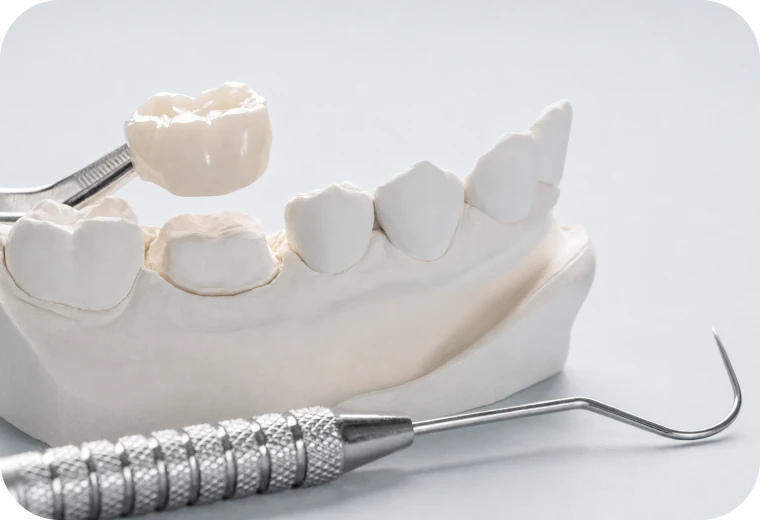
A crown covers a weakened tooth in order to protect it and restore its shape. It may be considered after extensive decay, a fracture, significant wear or root canal treatment, when the tooth has lost a substantial part of its structure.
It does not replace the root. It restores only the visible part of the tooth, when that tooth can still be kept. Whether it is indicated depends on how much tissue remains, the strength of the root, the condition of the nerve, gum health and chewing forces.
This treatment aims to protect the tooth, restore its function and return comfortable chewing wherever the situation allows.
The dental bridge: replacing a missing tooth
When one or more teeth are missing, a bridge may be considered. It is supported by the neighbouring teeth, known as abutment teeth. They carry the restoration and help restore continuity in the dental arch.
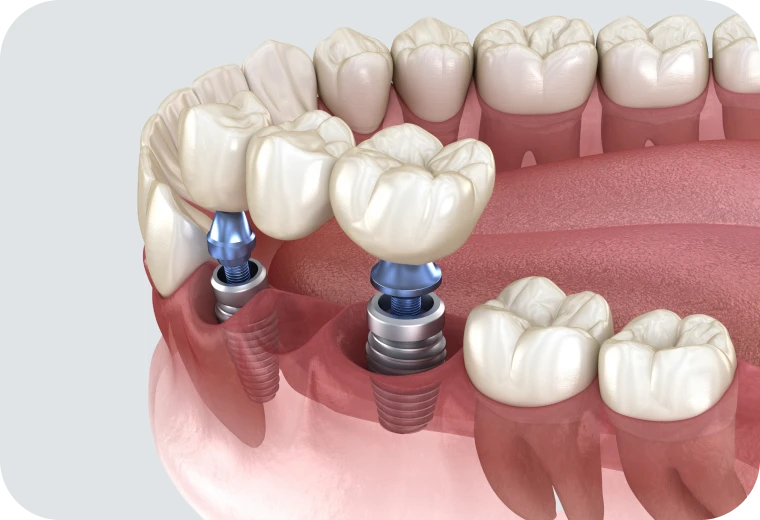
This option is discussed when the teeth on either side of the gap are strong enough, or when they already need a restoration. The abutment teeth then have to be prepared to receive the bridge. This preparation requires careful assessment.
A bridge does more than fill a gap. It forms part of wider thinking about chewing, the aesthetics of the smile, gum health and the stability of the remaining teeth.
Ceramics and indications
Crowns and bridges are made of ceramic. This material holds its shade well, looks close to natural enamel and makes it possible to rebuild the tooth precisely.
The choice of ceramic depends on the tooth concerned, chewing forces and how well it needs to blend in. A digital impression guides the design of the restoration for each situation.
A precise assessment before any restoration
Before making a crown or a bridge, the practitioner assesses the condition of the tooth, the neighbouring teeth, the gums and the way the teeth meet during chewing.
X-rays can be useful for examining the roots, older restorations, the supporting tissues or the area where the tooth is missing.
When several teeth are involved, the balance of the mouth as a whole must be taken into account.
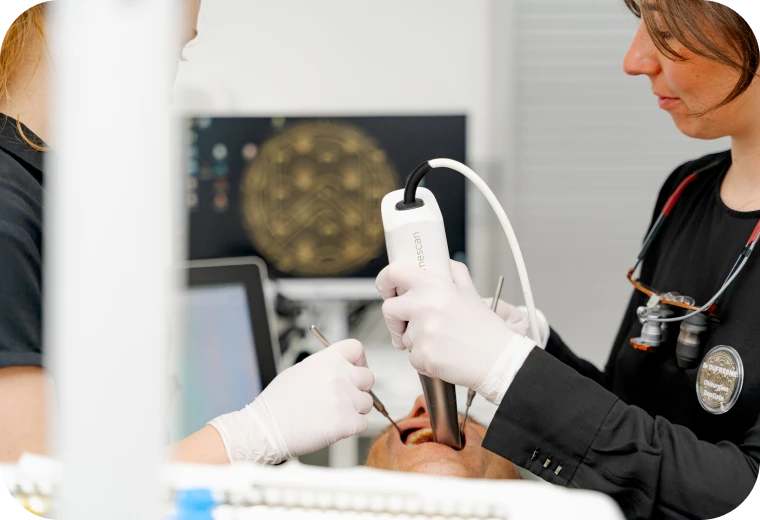
This assessment makes it possible to explain the available options, their indications and their limitations, so that together we can define a restoration suited to your situation, your functional needs and the appearance you are looking for.
A restoration designed for function and for your smile
A crown or a bridge does more than repair a tooth or fill a gap. The restoration has to work with the mouth as a whole. It takes account of chewing, the neighbouring teeth, the gums and the harmony of the smile.
Its shape, volume, shade and contacts with the neighbouring teeth are studied carefully. The aim is for the restoration to fit into the overall balance of the mouth.
This precision contributes to how well it works and how naturally it blends in.

Crown, bridge or implant: how to choose?
When a tooth can still be kept, a crown may be considered.
When a tooth is missing, several options can be discussed. A bridge may be considered when the neighbouring teeth can serve as supports or when they already need a restoration. An implant may be discussed when the teeth adjacent to the gap are healthy and the bone and gum conditions allow it.
Each option has its indications and its limitations. The assessment allows us to explain them so that the decision is clear and suited to your situation.
Caring for a crown or a bridge
A ceramic crown or bridge requires regular care and long-term follow-up. The ceramic itself cannot decay, but the remaining tooth tissue, the gums and the margins remain sensitive to plaque build-up.
When a crown or a bridge rests on a natural tooth or a preserved root, that tooth remains at risk of decay, particularly at the margins of the restoration. Gum health also contributes to the stability of the restoration over time.

Care relies on careful brushing, cleaning between the teeth and regular check-ups. With a bridge, the area beneath the section that replaces the missing tooth needs particular attention. Suitable cleaning aids may be recommended depending on the shape of the restoration and your hygiene habits.
Support at every stage
Making a crown or a bridge follows several stages: diagnosis, preparation of the tooth, digital impression, design of the restoration, try-in, fitting and adjustment.
A temporary restoration can protect the tooth while the final piece is being made, where the situation allows. The try-in makes it possible to check the shade, shape, volume and feel in the mouth before final fitting.
Each stage is explained so that you have a clear view of the treatment, its purpose and how it will proceed. Our support rests on listening to your expectations, explaining things clearly and treating you with precision.
A consultation to assess the restoration options
A weakened tooth, a crown that needs replacing, a large old restoration, a missing tooth or a possible bridge: every situation needs careful assessment.
A consultation makes it possible to examine the tooth concerned, the surrounding tissues and chewing forces. It also allows the various options to be considered according to the diagnosis. This may be a crown, a bridge, an implant or another restoration.

Frequently asked questions
What is the difference between a crown and a bridge?
A crown covers a damaged tooth to protect it and restore its shape. A bridge replaces one or more missing teeth, supported by the neighbouring teeth.
Is a dental crown always necessary on a damaged tooth?
No. Whether it is indicated depends on how much tissue remains, the strength of the tooth, the condition of the nerve, gum health and the tooth’s role in chewing. Other restorations can sometimes be considered.
Can a bridge be an alternative to an implant?
In some situations, yes. The choice between these two solutions depends on the condition of the neighbouring teeth, the bone volume available, gum health, the bite and your expectations.
Why use ceramic for a dental restoration?
Ceramic resists wear well, holds its shade and looks close to natural enamel. It makes it possible to restore the tooth while keeping the smile looking consistent.
How should a crown or bridge be cared for?
Daily cleaning of the teeth and the spaces between them, together with regular check-ups, allows the restoration to be monitored over time. With a bridge, the area beneath the section replacing the missing tooth needs suitable cleaning in order to protect gum health and keep the restoration stable.

